Birthstones have fascinated me since childhood. There's something magical about the idea that every month has a gem associated with it, and that gem somehow connects to the people born in that month. As I learned more about the history, I discovered that birthstones aren't as ancient as their mystical reputation suggests—they're largely a Victorian invention that became standardized in the early 20th century.
But history aside, birthstones remain a useful framework for thinking about gemstone jewelry. They're a starting point for understanding what you or your loved ones might like, and they make gift-giving easier. Even people who don't care about birthstones usually have a reaction—"Oh, I'm an emerald, I love emeralds"—that reveals something about their taste.
This guide covers each month's official birthstone and its alternatives, along with shopping and care tips.
The Modern Birthstone List
The modern birthstone list was established by the American National Retail Jewelers Association in 1912 and has been updated periodically since. Before that, various cultures had different birthstone traditions—many more than twelve stones were used, and different lists existed for different purposes.
Here's the current standard list:
January: Garnet
Color: Deep red, though garnet comes in every color except blue
History and Meaning: Garnet has been used since the Bronze Age. The name comes from the Latin "granatus" (seed-like) because garnets often resemble pomegranate seeds. Traditionally associated with constancy, loyalty, and protection.
About the Stone: Garnet is more durable than many people realize. The deep red varieties are most familiar, but green tsavorite and demantoid garnets are increasingly popular. Garnet scores 6.5-7.5 on the Mohs hardness scale.
Care: Clean with mild soap and water. Avoid harsh chemicals. Garnet can scratch if stored with harder stones.
Alternatives: None needed—garnet itself is the alternative for those who can't wear January's primary stone.
February: Amethyst
Color: Purple, ranging from pale lavender to deep violet
History and Meaning: Amethyst has been prized since ancient Greece, where it was believed to prevent intoxication (the name comes from "amethystos," meaning "not drunk"). Associated with clarity of thought, protection, and spiritual insight.
About the Stone: Amethyst is the purple variety of quartz. The most valued color is strong reddish-purple without brown or gray modifiers. "Siberian" amethyst (now referring to color quality rather than origin) describes the finest deep purple with red flashes.
Care: Amethyst can fade with prolonged exposure to sunlight. Clean with mild soap and water. Score 7 on Mohs scale—durable but can scratch.
Alternatives: If you want something different, consider violet sapphire, tanzanite, or purple spinel.
March: Aquamarine and Bloodstone
Colors: Aquamarine is blue; bloodstone is deep green with red spots
History and Meaning: Aquamarine was believed to be the treasure of mermaids, protecting sailors and ensuring safe voyages. Associated with courage, hope, and clarity. Bloodstone (heliodor plus red iron oxide) was believed to have powers related to blood and healing.
About the Stones: Aquamarine is the light blue variety of beryl, related to emerald. The finest colors are intense blue without green modifiers. Bloodstone is a variety of jasper (a type of quartz).
Care: Aquamarine is durable (7.5-8 on Mohs) and suitable for everyday wear. Bloodstone (6.5-7 Mohs) is also durable. Clean either with mild soap and water.
Alternatives: Blue topaz, sapphire, or zircon can substitute for aquamarine. Pure green jasper substitutes for bloodstone.
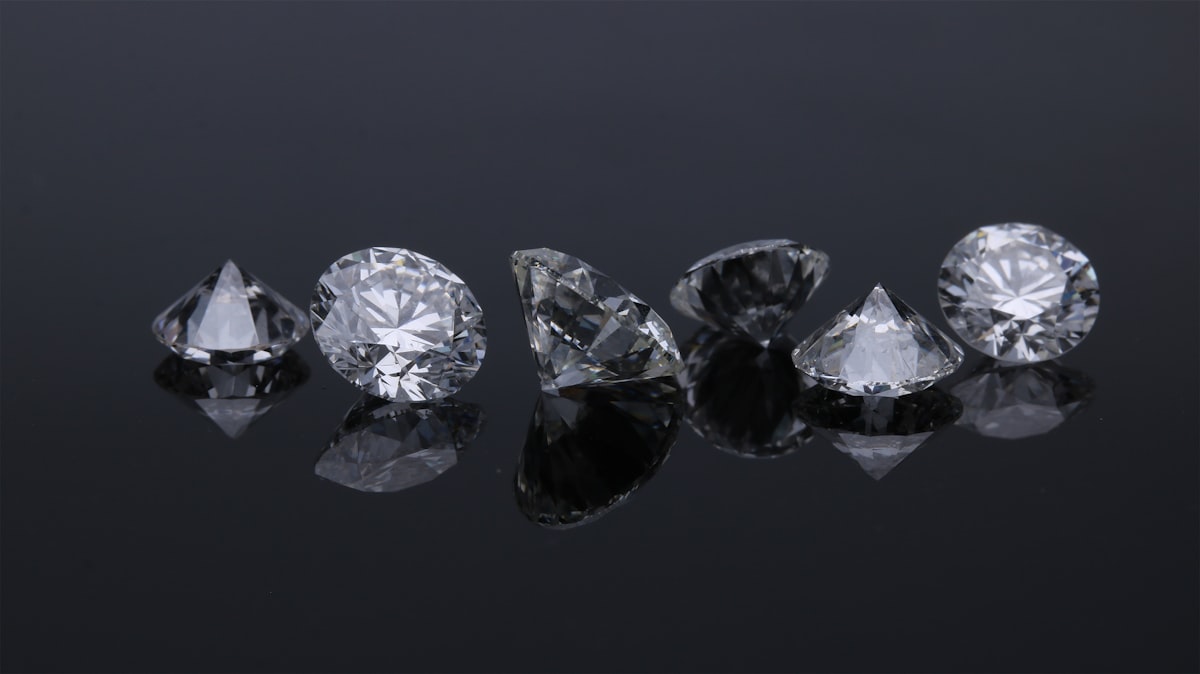
April: Diamond
Color: Typically colorless, but also comes in fancy colors
History and Meaning: Diamond has been associated with strength, courage, and invincibility since ancient times. The name comes from the Greek "adamas" (unconquerable). Traditionally the 60th anniversary gem.
About the Stone: Diamond is the hardest natural material (Mohs 10). Quality varies enormously—the 4 Cs (cut, color, clarity, carat) determine value. Diamond engagement rings represent the cultural standard in many countries.
Care: Diamonds are extremely durable but can chip if struck hard enough. Clean with mild soap and water, or commercial jewelry cleaner. Diamonds can be cleaned ultrasonically unless they have fractures or have been treated.
Alternatives: White sapphire, white topaz, or cubic zirconia for those wanting diamond appearance at lower cost. (Note: these are not the same as lab-grown diamonds, which are real diamonds.)
May: Emerald
Color: Green, typically with slight blue or yellow modifiers
History and Meaning: Cleopatra was famously associated with emeralds, though much "Cleopatra's emerald" jewelry was likely peridot, not emerald. Emeralds symbolize rebirth, hope, and spring. Associated with fidelity and truth.
About the Stone: Emerald is the green variety of beryl. Nearly all emeralds have inclusions (called "jardin" or garden) that are part of their character. Colombian emeralds are most prized; Zambian emeralds are also highly regarded.
Care: Emerald is relatively brittle (Mohs 7.5-8) and has internal fractures that can be damaged by ultrasonic cleaners or harsh chemicals. Clean with mild soap and water only. Emeralds are typically oiled—have them re-oiled periodically.
Alternatives: Green tourmaline (particularly Paraiba), tsavorite garnet, or chrome diopside for similar green colors.
June: Pearl, Alexandrite, and Moonstone
Colors: Pearl is white/cream (though many colors exist); Alexandrite is green in daylight, red in incandescent light; Moonstone is typically blue-white
History and Meaning: Pearls have symbolized purity, innocence, and modesty for millennia. Alexandrite, discovered in 1830, was named for Tsar Alexander II and represents the duality of human nature. Moonstone has been associated with lunar deities and intuition.
About the Stones: Pearls are organic gems formed by mollusks—they require no cutting. Akoya, freshwater, Tahitian, and South Sea are the major types. Alexandrite is a rare chrysoberyl with remarkable color change. Moonstone is an orthoclase feldspar with adularescence.
Care: Pearls are soft (Mohs 2.5-4.5) and sensitive to acids, including body oils and perfumes. Wear pearls last (after cosmetics) and wipe them after wearing. Alexandrite (8.5 Mohs) is durable; moonstone (6-6.5 Mohs) is more delicate.
Alternatives: Mother-of-pearl for pearl; just accept that alexandrite has no good substitute; blue cat's eye or blue moonstone for moonstone.
July: Ruby
Color: Red, specifically pigeon blood red is most prized
History and Meaning: Ruby has been called the "king of precious stones" and is associated with passion, power, and protection. Ancient cultures believed rubies held the power of life. The finest rubies were historically from Myanmar (Burmese rubies).
About the Stone: Ruby is the red variety of corundum (all other corundum colors are sapphire). Fine rubies over 2 carats are exceptionally rare and valuable. Heat treatment is common and accepted; unheated rubies command significant premiums.
Care: Ruby is extremely durable (Mohs 9), second only to diamond. Clean with mild soap and water or ultrasonic cleaner (unless heavily fractured).
Alternatives: Red spinel, red tourmaline (rubellite), or garnet for similar colors without ruby prices.
August: Peridot, Spinel, and Sardonyx
Colors: Peridot is distinctive olive green; spinel comes in many colors (red most famous); sardonyx is red and white banded agate
History and Meaning: Peridot was prized in ancient Egypt and called "the gem of the sun." Spinel was often confused with ruby—some of history's most famous "rubies" were actually spinels. Sardonyx has been used for cameos since ancient Rome.
About the Stones: Peridot is the yellow-green gem variety of olivine. It forms in volcanic rock and sometimes even comes from meteorites. Spinel occurs in many colors; red spinel from Burma and Vietnam is most valuable. Sardonyx is a variety of onyx (banded agate).
Care: Peridot (6.5-7 Mohs) is sensitive to pressure and thermal shock—avoid harsh conditions. Spinel (8 Mohs) is very durable. Sardonyx (6.5-7 Mohs) is reasonably durable but can chip.
Alternatives: Green sapphire or tsavorite for peridot; almandine garnet or tourmaline for spinel; regular onyx or banded agate for sardonyx.
September: Sapphire
Color: Blue is most famous, but sapphire comes in every color except red
History and Meaning: Sapphire has symbolized wisdom, royalty, and divine favor for millennia. Medieval clergy wore sapphires to symbolize heaven. Associated with fidelity, sincerity, and integrity.
About the Stone: Sapphire is the non-red variety of corundum. Blue sapphire is most valuable; Kashmir sapphire (now extremely rare) sets the quality benchmark. Fancy colored sapphires—pink, yellow, padparadscha—are also prized.
Care: Sapphire is extremely durable (Mohs 9), suitable for everyday wear in rings. Clean with mild soap and water or ultrasonic cleaner (unless heavily fractured or treated).
Alternatives: Blue spinel, tanzanite, or blue topaz for blue colors. Other colored stones for fancy sapphire colors.
October: Tourmaline and Opal
Colors: Tourmaline comes in every color; opal shows play-of-color in various base colors
History and Meaning: Tourmaline's name comes from the Sinhalese "turamalli" (mixed). Each color was once thought to have different properties. Opal has been considered both lucky and unlucky at different times—its play-of-color was explained by various legends.
About the Stones: Tourmaline's color diversity is unmatched—no other gem species comes in as many colors. Paraiba tourmaline (electric blue from copper) is most valuable. Opal forms from silica spheres that diffract light; the play-of-color depends on sphere size and arrangement.
Care: Tourmaline (7-7.5 Mohs) is durable but sensitive to thermal shock. Opal (5-6.5 Mohs) is delicate—avoid heat, dryness, and harsh chemicals. Don't store opals in airtight containers.
Alternatives: For tourmaline, any gem in the desired color works. For opal, there is no true alternative—lab opal exists but lacks natural opal's character.
November: Topaz and Citrine
Colors: Topaz comes in many colors (blue most common); citrine is yellow to orange
History and Meaning: Topaz was used in ancient Egypt and Rome to counter magic spells and protect the wearer. Citrine (from French "citron") has been called the "merchant's stone" for its association with prosperity.
About the Stones: Topaz occurs in many colors; imperial topaz (reddish-orange) is most valuable. Blue topaz is abundant and affordable—most is produced by treating colorless topaz. Citrine is often heat-treated amethyst (the transformation turns purple to yellow).
Care: Topaz (8 Mohs) is durable but has perfect cleavage—it can chip or split if struck right. Citrine (7 Mohs) is durable enough for everyday wear. Both clean with mild soap and water.
Alternatives: Yellow sapphire, golden beryl, or amber for yellow; smokey quartz for brown.
December: Turquoise, Zircon, and Tanzanite
Colors: Turquoise is blue-green; zircon comes in many colors (blue most popular); Tanzanite is blue-violet
History and Meaning: Turquoise has been prized by cultures from ancient Egypt to the Aztecs, who associated it with sky gods and protection. Zircon is one of the oldest minerals on Earth. Tanzanite, discovered in 1967, is named for Tanzania, its only source.
About the Stones: Turquoise is a phosphate mineral that forms in arid regions. Most turquoise is treated (stabilized) to improve durability. Zircon occurs in many colors; the blue variety is most popular. Tanzanite is a blue variety of zoisite, discovered only in the 20th century.
Care: Turquoise (5-6 Mohs) is soft and porous—avoid oils, perfumes, and prolonged water. Zircon (7.5 Mohs) is reasonably durable but prone to chipping. Tanzanite (6.5-7 Mohs) is more fragile and should be worn carefully.
Alternatives: Stabilized turquoise or howlite for turquoise look; blue topaz or aquamarine for zircon's blue; blue sapphire or iolite for tanzanite's violet-blue.
Birthstone Shopping Tips
Quality Over Size
For birthstone jewelry, a smaller, higher-quality stone usually provides more satisfaction than a larger, included stone. Birthstones are typically set in modest-sized pieces—a 2-carat included emerald will look disappointing, but a 0.5-carat clean emerald can be stunning.
Consider the Wearer's Lifestyle
Some birthstones are more durable than others. If the wearer is hard on jewelry, consider harder stones: diamond, ruby, sapphire. For more delicate wearers, softer stones work fine. If you want birthstone jewelry that will last, prioritize durability.
Understand Treatments
Most gemstones are treated in some way. Heat treatment for ruby and sapphire is standard and accepted. Emerald oiling is traditional. Turquoise is almost always stabilized. These treatments make beautiful stones available at accessible prices. Ask about treatments and factor them into your decision.
Set It Right
The setting matters for protection. Delicate stones (opal, pearl, turquoise) benefit from protective settings—bezels or surrounds that shield the vulnerable areas. Harder stones can be set in various ways depending on aesthetic preference.
Budget Wisely
Birthstone jewelry spans enormous price ranges. Diamond, ruby, sapphire, and emerald can be very expensive for fine quality. Alternative stones and lighter treatments make beautiful birthstone jewelry accessible at any budget. There's no "wrong" choice—only what's right for your situation.
Making Birthstones Personal
The best birthstone jewelry connects to the wearer. If someone has a genuine connection to their birth month stone, honor it. If they prefer alternative stones for aesthetic or ethical reasons, that's valid too.
The tradition of birthstones is meaningful not because of some mystical connection, but because it gives us a starting point for thinking about what we give and why. The fact that we associate garnet with January or sapphire with September matters less than the fact that these associations help us choose gifts with intention.
Whether you follow the traditional list exactly or adapt it to your preferences, birthstones remain a beautiful framework for celebrating the people in your life.